

At the Center of Geopolitical Turmoil
24 August 2026
Between the State’s Ambitions and the Shipowner’s Bottom Line
24 August 2026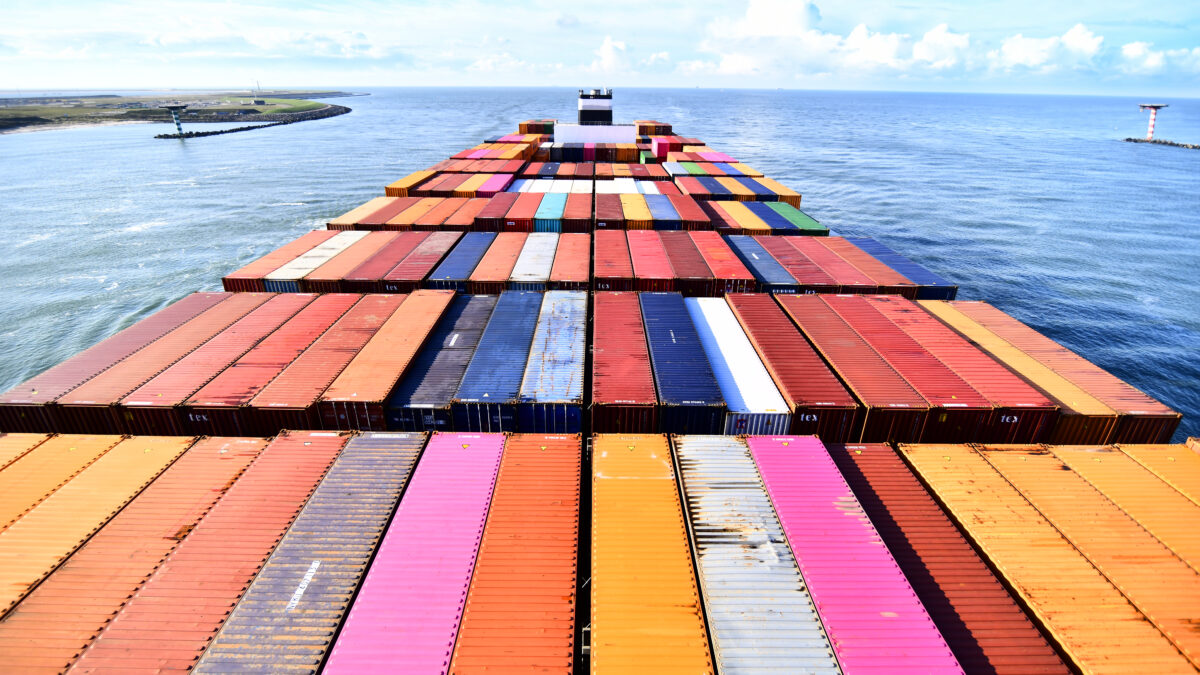
Consolidation in the TSL industry is not a new phenomenon, but it has clearly accelerated in recent years. First, the shipowning market became highly concentrated; later, similar pressure began to build in freight forwarding and contract logistics. This is no coincidence. Decisions regarding acquisitions, mergers, and the formation of larger groups have been influenced, in turn, by the 2008 financial crisis, the pandemic, spikes in energy prices, disruptions at ports and along land-based segments of supply chains, as well as geopolitical factors that are forcing a restructuring of transport networks and greater operational resilience.
In practice, this means that consolidation today has two sources. First, it is a defensive response to declining or unstable volumes. Second, it is a tool for building market advantage where scale provides a better negotiating position, greater access to networks, terminals, slots, technology, and customers. It is therefore impossible to honestly claim that consolidation has nothing to do with the risk of monopolization. Not every merger results in a monopoly, but excessive concentration leads to an oligopolistic situation in which competition formally exists, but the customer’s real choice is significantly narrowed. The European Commission itself has acknowledged that the EU’s block exemption for shipping consortia no longer promotes competition and has allowed these regulations to expire on April 25, 2024.
This is most evident in the shipowner market. Today, the global container shipping market is dominated by a small group of the largest carriers, and the Alphaliner ranking shows the entrenched dominance of a few megaplayers over the rest of the market. At the same time, carriers continue to engage in various forms of operational cooperation, a current example being the Gemini partnership between Maersk and Hapag-Lloyd, launched in 2025. This concentration did not arise overnight but is the result of more than a dozen years of acquisitions, mergers, and bankruptcies among weaker players.
This shift was driven, among other things, by Maersk’s acquisition of P&O Nedlloyd, CMA CGM’s purchase of APL, the integration of UASC with Hapag-Lloyd, Maersk’s acquisition of Hamburg Süd, the merger of COSCO’s and China Shipping’s Chinese assets along with the subsequent integration of OOCL, as well as the bankruptcy of Hanjin Shipping, which became a symbolic moment marking the end of an era in container shipping. The most recent example is the acquisition of ZIM by Hapag-Lloyd, announced in February 2026.
For freight forwarders, the effects of this consolidation are very tangible. Just a dozen or so years ago, on many routes, it was possible to build a service offering by coordinating with a larger number of independent carriers. Today, on some routes, the choice is effectively limited to two or three options, and freight forwarders are also competing with carriers who are increasingly developing direct sales and their own logistics infrastructure. In this situation, the importance of scale naturally increases: greater volume provides greater bargaining power with carriers, terminals, and subcontractors. This is precisely why the freight forwarding market has also entered a phase of accelerated consolidation.
A good example is the recent major moves in Europe. DSV finalized its acquisition of Schenker on April 30, 2025, creating a group with revenues of approximately 310 billion DKK and a workforce of nearly 160,000 people. Previously, DSV acquired Panalpina and , consistently building a growth model based on the integration of successive large organizations. Rhenus, in turn, acquired C. Hartwig Gdynia, strengthening its position in the Polish market. At the same time, CMA CGM is expanding the group’s logistics arm through CEVA Logistics: following the acquisitions of GEFCO in 2022 and Bolloré Logistics in 2024, CEVA has significantly increased its scale in ocean freight, air freight, and land logistics.
This leads to the most important question: Are such consolidations today driven primarily by a weaker freight market? To a large extent, yes. UNCTAD indicates that following moderate growth in maritime trade in 2024, the growth rate in 2025 slowed to just 0.5%, and carriers and operators are operating under conditions of high uncertainty, rising costs, and vulnerability to disruptions at key points in global supply chains. When volume isn’t growing as fast as shipping capacity, pressure builds to cancel services, pool resources, and seek synergies. At the same time, such moves reinforce market concentration. In other words: weaker demand explains consolidation, but it doesn’t negate concerns about the excessive market power of the largest groups.
Can consolidation have a positive impact on the industry? Yes, but not every type of consolidation. The strongest arguments in favor can be found in vertical or complementary consolidations—that is, those that bring together different links in the same value chain, rather than two direct rivals competing for the same customer base. In such a scenario, a group can offer a broader range of services, improve process coordination, reduce transaction costs, and increase service predictability. This is particularly important today, as supply chain resilience is becoming increasingly crucial, and customers expect not only transportation but also data integration, flexibility, and the ability to quickly switch cargo flows between modes of transport.
In this context, an interesting example from the Polish market is PSA’s entry into Loconi Intermodal. The transaction was finalized on December 2, 2024; PSA acquired an 85% stake, while Loconi retained its position as an intermodal operator developing connections between ports and their hinterlands. From a market perspective, this is significant because we are not talking about a classic horizontal acquisition, but rather a combination of terminal and intermodal capabilities. This type of integration can yield benefits not by eliminating a competitor, but by building a neutral and broader offering for many market participants.
This does not mean, however, that consolidation is neutral for customers. The greatest risk lies in the fact that as the number of independent operators decreases, the diversity of offerings diminishes. From the perspective of shippers and freight forwarders, this means a weaker negotiating position, fewer opportunities to compare service options, and greater vulnerability to imposed commercial terms. The European Commission noted that, during the period under review, there were no strong indications that the cost savings resulting from carrier collaboration were being passed on to customers in a predictable manner in the form of lower rates. This is an important signal: scale may improve an operator’s efficiency, but it does not necessarily translate into a benefit for the market.
So who stands to gain, and who will suffer? The biggest players stand to gain the most, as they expand their networks, customer bases, and range of services through acquisitions, while simultaneously increasing their bargaining power. Large corporate clients also stand to gain to some extent, as for them, a larger group can mean global reach, a uniform standard of service, and easier contract management across multiple countries. On the other hand, medium-sized freight forwarders, smaller logistics companies, and shippers who do not generate sufficiently large volumes to negotiate attractive terms may suffer. In the long term, the cost of this consolidation may also be passed on to the end consumer if reduced competition results in higher rates or lower service quality.
Is Europe heading toward a market consisting solely of a dozen or so giants? In the global container shipping segment, this process is already well advanced. In freight forwarding and logistics, a scenario of complete dominance by a dozen or so companies is less likely, as this market remains more diverse by nature. There will always be room for specialized players: companies serving specific industries, product niches, demanding projects, non-standard relationships, or clients who simply do not want to be just a number in a global corporation. Large groups will continue to grow, but they will not completely eliminate medium-sized and smaller operators. The latter’s advantages will remain their specialization, flexibility, relationship-based service model, and ability to tailor solutions to specific clients.
Ultimately, consolidation in the logistics sector is therefore both a consequence of crises and a tool for strategic market restructuring. Geopolitics, the restructuring of supply chains, nearshoring, tensions in the Red Sea, cost pressures, and investment requirements related to digitalization and decarbonization tend to reinforce this trend rather than weaken it. The key question is no longer whether consolidation will continue, but where the line is drawn between justified integration and excessive concentration. Processes that increase resilience, interoperability, and service quality will be healthy for the industry. Those that, instead of building value for the customer, narrow choice and entrench an oligopolistic structure will become dangerous.
The article was written in collaboration with Namiary Na Morze i Handel – a biweekly magazine providing expert information on the most important events and issues in the Polish maritime economy.