
A Response to Crises or a Path to an Oligopoly?
24 August 2026
Forum Leader Sławomir Kalicki invites you to the 25th edition!
2 October 2026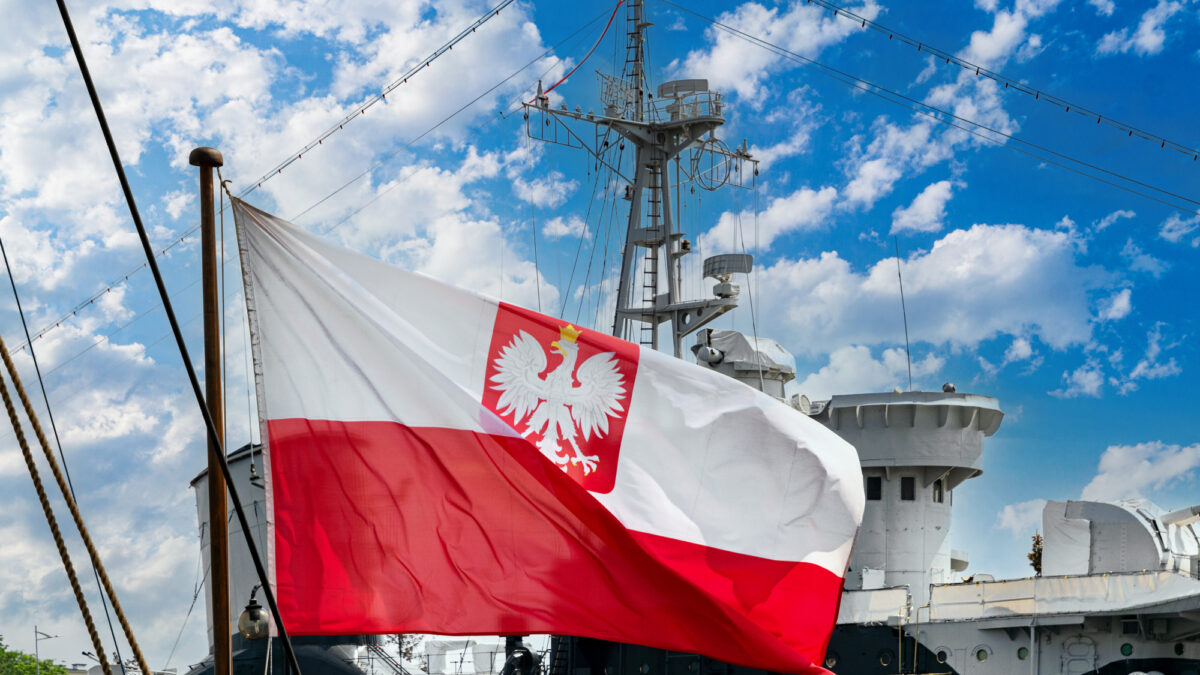
The topic of a competitive Polish flag has been a part of maritime debate for years. This time, however, it is not just about declarations. Work on rebuilding it has actually begun, and the Ministry of Infrastructure has launched more advanced initiatives, including measures related to social security costs, the restructuring of the ship registry, and fairly piecemeal amendments to the Maritime Code.
At the same time, a characteristic weakness of Polish maritime reforms remains evident: the predominance of administrative thinking over economic calculations. There is still no clear answer to the fundamental question—why would a shipowner choose the Polish flag when cheaper and more proven solutions are available on the market? The competitiveness of a flag is not an ideological category, but rather the result of a calculation that takes into account labor costs, tax burdens, the ability of the law, the efficiency of the registry, and the functioning of the entire maritime administration, including the inspection system.
The most significant barrier to the competitiveness of the Polish flag has always been high labor costs resulting from the social security system (particularly from EU Regulation 883/2004, which links the flag to the place of insurance coverage). Recent legislative changes offer hope for reducing these costs. Starting in January 2026, seafarers may register with ZUS and pay contributions based on a base amount corresponding to the minimum wage, which in practice significantly reduces the cost of employment. However, this solution is voluntary and depends on the seafarer’s decision; the employer cannot compel them to do so. The lack of a uniform model means that uncertainty persists on the employer’s side. From a competitiveness standpoint, this is not a stable framework.
The taxation of seafarers’ income is also of significant importance. The exemption under Article 21(1)(23c) of the Personal Income Tax Act (the 183-day exemption) requires working at least 183 days per year on a vessel flying the flag of a European Economic Area country, including Poland. If this threshold is not met, income earned while working under the Polish flag is subject to taxation in Poland under general rules.
When sailing under a foreign flag, however, it is possible to additionally apply the relevant double taxation treaty, which in practice may reduce or eliminate tax liability in Poland even without meeting the 183-day work requirement. Working under the Polish flag for a Polish employer therefore remains more risky from a tax perspective than working under a foreign flag.
If the components of the system—taxes and contributions—are not linked, even correct piecemeal solutions will not translate into real competitiveness for the flag. In such a situation, the seafarers’ ZUS model may suffer the same fate as the tonnage tax. It was a simple and competitive solution, but without a parallel reform of labor costs, it failed to deliver results—only one ship took advantage of it. The problem was not the design of the instrument, but the inconsistent regulatory environment. It is worth keeping this in mind.
European Union law permits a wide range of state aid instruments for the shipping sector. Many member states have effectively utilized these opportunities to establish competitive tax and social security regimes, as well as a stable environment for shipowners.
Compared to the reforms carried out in other EU countries—such as the Baltic states, France, Italy, Belgium, and Portugal (Madeira)—Poland’s efforts must be regarded as exceptionally modest. Those jurisdictions have opted for comprehensive packages of measures covering taxes, labor costs, and public support instruments. In Poland, the measures are more ad hoc than systemic.
Poland, too, could adopt a more decisive support model, drawing inspiration from solutions in place in other EU countries. However, such modifications require notification to and approval by the European Commission. This procedure, while worth the effort, is complex, time-consuming, and in practice often extends beyond the term of a single parliamentary session, which in politics would require substantive agreement across the divides of various political forces. The only public aid measure currently in effect in Poland for the shipping industry is the aforementioned 183-day tax relief, which is no longer a new measure—it has been in effect since 2019 and generally applies to all EEA flags.
For years, Polish shipowners have pointed to excessive bureaucracy as one of the main barriers to the competitiveness of the Polish flag. This refers to the complex and time-consuming procedures involved in ship registration, changes to registrations, inspection activities, and day-to-day dealings with the maritime administration.
The problem is not the obligation to meet convention requirements itself—these apply in every jurisdiction—but rather the manner in which they are implemented: multi-stage procedures, excessive documentation requirements, a lack of full digitization, and prolonged processing times. In practice, this results in vessel downtime, additional operating costs, and limited predictability in planning.
Importantly, a significant portion of these problems does not stem directly from the wording of the regulations, but rather from the practice of their application and the organization of the authorities’ work. Streamlining procedures, standardizing documents, digitizing proceedings, and consistently shortening deadlines could be achieved without fundamentally changing the laws. In an industry where every day of downtime results in measurable losses, administrative efficiency is just as important as the tax rate.
The same logic applies to a ship registry—its competitiveness depends not so much on its legal structure as on how efficiently and effectively it operates in practice.
Competitive registries have built their reputations over decades. They are chosen because they offer solutions that are familiar to the market and proven in practice. Their advantage stems from a higher degree of computerization, less red tape, and often from the fact that they are—as in the case of Liberia or the Marshall Islands, for example—de facto private registries.
The Ministry of Infrastructure has also announced a reform of the ship registry. At this stage, the proposals primarily boil down to the abolition of the Maritime Chambers and the creation of a single central administrative registry. However, detailed technical solutions are lacking: it is unclear what the registration procedures would look like, what the deadlines would be, or how the continuity of rights already registered would be ensured. It is therefore more of a declaratory statement of intent than a proposal for concrete solutions.
A change in structure alone—especially one as radical as this—does not guarantee competitiveness. A registry becomes attractive when it operates efficiently and predictably. In many areas, less spectacular measures implemented within the framework of existing Maritime Chambers could be more effective: full digitization of procedures, simplification of documentation, standardization of forms, and the introduction of realistic, short registration deadlines.
The costs of ship registration remain a separate issue. In the past, they were perceived as relatively high, which did not foster the registry’s competitiveness. Currently, the Ministry of Infrastructure is proposing a significant reduction in these costs—in practice, to a nearly symbolic level. The direction itself is understandable, but the registry’s competitiveness should not be based solely on minimizing fees. The goal of the reform should be to create a predictable and reliable system, not merely a cheap one. The registry should attract participants through the quality and efficiency of its operations, not through a low barrier to entry.
As a side note regarding the proposed changes—the proposal to transfer maritime accident cases from the Maritime Chambers to the general courts should be treated with great caution. These are proceedings that require not only legal knowledge but also a practical understanding of the realities of shipping. Anyone who has dealt with long-running disputes in the general courts knows how easily technical cases can become protracted and overly dependent on expert opinions. In these cases, the maritime chambers have a clear advantage over the general courts. This advantage stems from their specialized composition, experience with the realities of shipping, and established case law, which cannot be easily replicated if the chambers are abolished.
Even a well-prepared reform will not result in an immediate return of ships to the Polish flag. The market needs time to assess whether the new solutions actually change the economic equation. The competitiveness of a flag cannot be built by decree or simply by changing the name of an institution. If the proposed solutions do not form a coherent whole, even the most ambitious draft laws will remain merely a tweak to the system rather than a breakthrough. EU law offers real opportunities to support shipping through state aid instruments. Many countries have taken advantage of these to build a competitive edge. In Poland, the problem is not a lack of tools, but a lack of consistency and long-term consensus on the direction of change. Reforms that extend beyond a single term of office require stability and cooperation across party lines—and this is often lacking in practice. Rebuilding the Polish flag is a project that will take years. It requires regulatory courage, legislative discipline, and a basic capacity for political consensus. Without these, even the best ideas will remain on paper, and shipowners will continue to choose solutions that offer them, above all, predictability and economic viability.
The article was written in collaboration with Namiary Na Morze i Handel – a biweekly magazine providing expert information on the most important events and issues in the Polish maritime economy.